Source: BBC
US Confirms Weapons Are Now in Space as Military Rivalry With China and Russia Grows.
The United States has confirmed that it has weapons deployed in space, ending years of ambiguity over whether Washington had moved beyond using satellites for surveillance, communication and navigation to placing actual weapons in orbit.
Air Force Secretary Troy Meink made the disclosure on Monday at the Air, Space & Cyber Conference in National Harbor, Maryland, where he said the US now has “on-orbit space control weapons capable of defending the joint force against hostile adversary action.”
Meink also declined to say whether they had been tested while Pentagon did not say how many weapons are in orbit, when they were launched or what they are capable of doing.
During a question-and-answer session after his speech, Meink said the acknowledgement was intentional and that the phrasing had been “very well thought out.” He said the US needed to maintain its dominance in space because of the growing ability of adversaries threatening American systems.
The disclosure is significant because it is the first time the US government has publicly acknowledged that it has weapons operating in orbit. Washington has for years warned that China and Russia were developing capabilities that could interfere with or attack American satellites, but had not previously confirmed that comparable US weapons were already deployed above Earth.
The term “space control” is broad and the US Space Force says it covers operations intended to contest and control the space domain using both kinetic and non-kinetic means. In practice, that could encompass systems designed to interfere with an adversary's satellites as well as weapons capable of physically attacking them. The US has not said which of those capabilities are currently in orbit.
That secrecy is likely to remain part of the strategy. Meink said he would not discuss what the weapons can do or whether they had been tested, arguing that details about the capability would undermine its purpose.
His explanation for the deployment was deterrence.
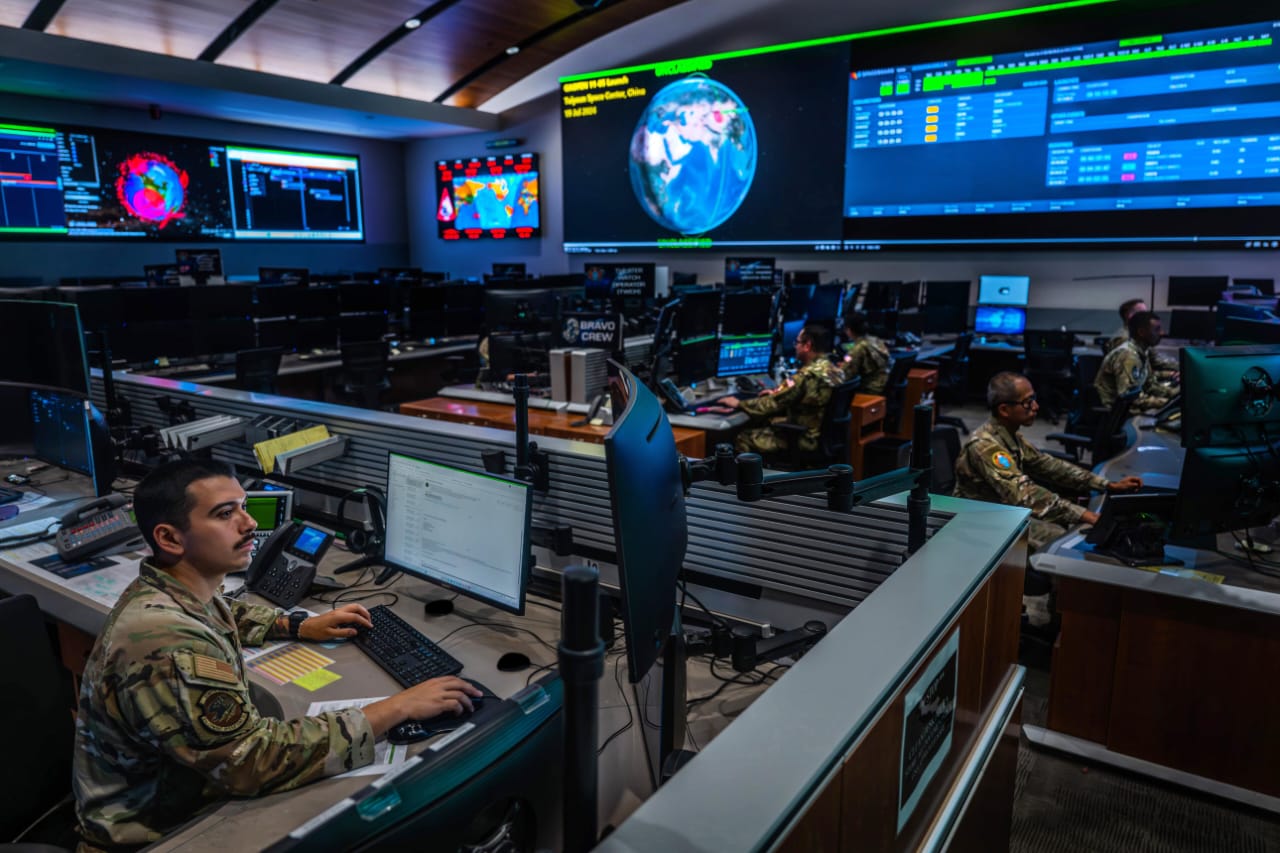
The US military depends heavily on satellites for communications, intelligence, navigation and missile warning, making them increasingly important to military operations on Earth. An adversary capable of disabling those systems could affect how American forces communicate, locate targets or coordinate operations.
China and Russia have spent years developing their own counter-space capabilities, including systems and manoeuvres that Washington considers potential threats to US satellites. American officials have consequently argued that the country must be able to protect its space assets and respond if they come under attack.
The concern is that the same logic can push each major power further into an arms race.
A weapon placed in orbit to deter an attack can also become a reason for another country to develop a weapon of its own. Analysts have warned that the US announcement could therefore accelerate an already growing military competition between Washington, Beijing and Moscow over who controls the space around Earth.
China has already objected to the development.
Following the US disclosure, Beijing called for Washington to stop the militarisation of space and warned against turning outer space into a battlefield. The reaction reflects a broader dispute over whether military competition in orbit is becoming destabilising, particularly as the major powers develop systems intended to interfere with, track or potentially disable one another's spacecraft.
The United States, meanwhile, has been expanding the role of the Space Force since its creation in 2019. The service has increasingly moved towards preparing for situations in which satellites are not merely supporting military operations on Earth but are themselves targets in a conflict.
That shift is critical because modern militaries are deeply dependent on space.
GPS navigation, satellite communications, surveillance and missile-warning networks all rely on infrastructure above the atmosphere. A conflict in space would therefore not remain in space. Disrupting those systems could affect aircraft, ships, missiles, soldiers and command networks on the ground.
International law also leaves considerable room for this competition. The 1967 Outer Space Treaty prohibits countries from placing nuclear weapons and other weapons of mass destruction in orbit, but it does not impose a blanket ban on conventional military activity or every type of conventional weapon in space.
That has allowed the world's major military powers to build increasingly sophisticated counter-space capabilities while operating within a legal framework that was written at the beginning of the space age.
What Washington has now confirmed is that at least some of those capabilities are no longer merely being developed or discussed.
The United States has not said exactly where the weapons are, how many there are or what they can do. But by acknowledging their existence, Washington has sent a clear message to the countries most capable of challenging its position in space: the US intends to be able to fight back if the competition above Earth turns hostile.

 Noble Nigeria

© Noble Nigeria. All Rights Reserved || Privacy Policy and User Agreement