Source: BBC
China Opens Pinglu Canal, Creating a New Route From Its Southwest to the Sea.
China has opened the Pinglu Canal in southern Guangxi, completing one of the country's largest transport projects in decades and giving its southwestern interior a direct water route to the sea._
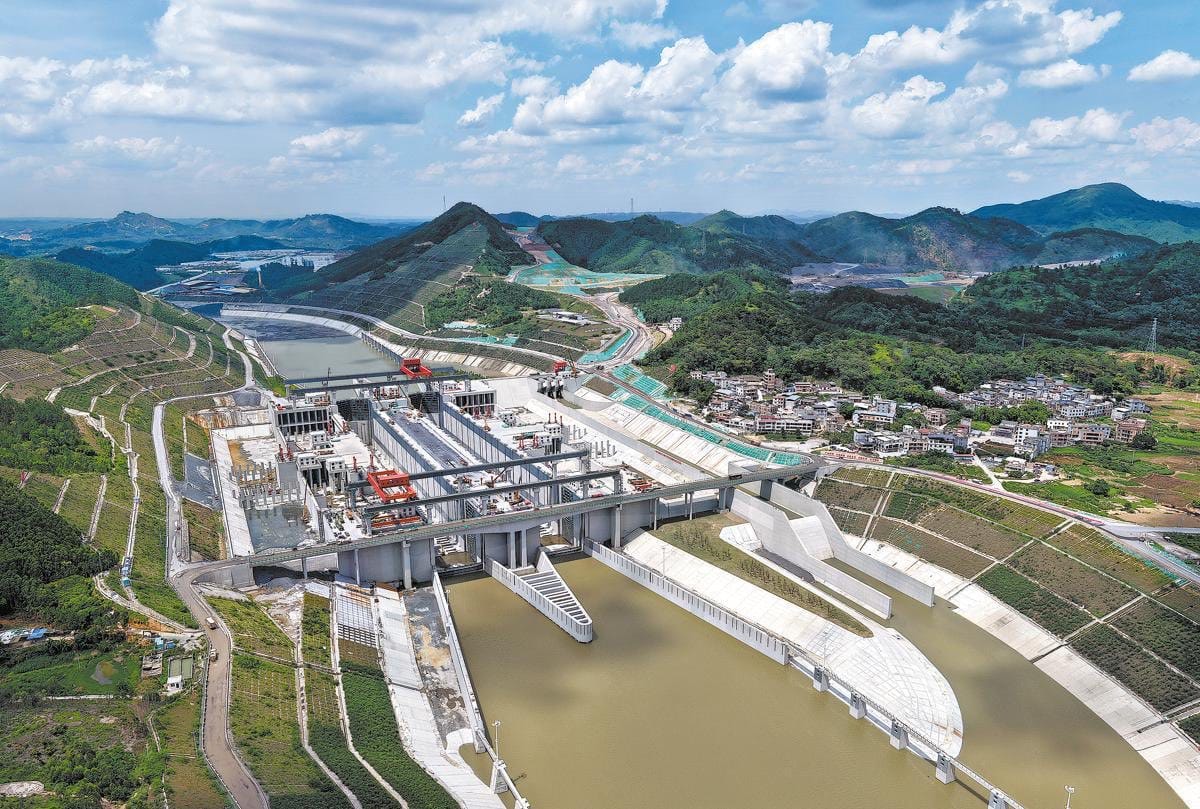
The 134.2-kilometre canal officially opened to navigation on Wednesday, September 16, after four years of construction. It connects the Xijin reservoir near Hengzhou in Guangxi with the Beibu Gulf through the Qinjiang River, creating a direct link between the inland waterways of southwestern China and international shipping routes.
At an opening ceremony in Qinzhou, Chinese Vice Premier Ding Xuexiang described the canal as a major part of the country's New Western Land-Sea Corridor, a transport network designed to connect China's western provinces with ports and overseas markets.
The project cost about 72.7 billion yuan, or roughly $10.75 billion, and took four years to complete. It can accommodate vessels carrying up to 5,000 tonnes of cargo.
For China's southwestern provinces, the significance is straightforward: goods that previously had to travel eastwards along the Pearl River system before reaching the sea can now take a more direct southern route through Guangxi.
The traditional route from parts of the southwest to the coast could require cargo to travel through the Pearl River Delta and Guangzhou before reaching maritime shipping lanes. The Pinglu Canal cuts more than 560 kilometres from the inland water journey for cargo heading towards the sea. Chinese authorities estimate that the shorter route could reduce overall logistics costs by between 18 and 30 per cent and save more than 5 billion yuan in transport costs each year.
That change could affect particularly, manufacturers and exporters in China's interior.
Automotive components, machinery, agricultural products and other goods produced in inland provinces can move by river towards the Beibu Gulf before entering international shipping routes. One of the first cargo movements linked to the canal involved automobile components travelling from Liuzhou towards Vietnam.
The route also gives inland areas such as Yunnan and Guizhou a new connection to the sea through Guangxi. In turn, the canal is expected to strengthen the movement of goods between China's western interior and the economies of the Association of Southeast Asian Nations.
That is where the project takes on significance beyond Guangxi.
The Beibu Gulf sits close to Southeast Asia, and ports in the area already handle extensive trade with ASEAN countries. China has been ASEAN's largest trading partner for 17 consecutive years, while ASEAN has been China's largest trading partner for six years. Trade between the two sides reached 2.75 trillion yuan in the first four months of 2026, according to Chinese customs data cited by China Daily.
The canal is intended to make that relationship easier to move through.
Instead of relying entirely on long road and rail journeys to coastal ports, some cargo from China's western interior can now reach the Beibu Gulf by water, where it can be transferred to ocean-going shipping.
The engineering behind the canal itself is substantial.
The project crosses a natural elevation difference of about 65 metres and contains three major navigation hubs — Madao, Qishi and Qingnian. Its largest ship locks were designed to conserve water while allowing vessels to move through the elevation changes. Chinese authorities say the project incorporates several major engineering innovations, including a water-saving lock system.
The canal also represents the completion of an idea that predates modern China.
More than a century ago, Sun Yat-sen proposed developing a route through Guangxi that would provide China's southwest with a more direct connection to the sea. The idea was never realised at the time.
Construction of the modern Pinglu Canal began on August 28, 2022, after the project was incorporated into China's national infrastructure planning. Four years later, the waterway is open to commercial navigation.
Its opening does not automatically make it a major international trade route. The next test will be whether enough cargo moves through it to justify the enormous investment and whether industries in China's interior reorganise their supply chains around the new waterway.
But the physical connection is now there.
A cargo route that once had to move east before reaching the sea can now move south through Guangxi and into the Beibu Gulf.
For China, that means more than a new canal. It creates another link between its inland economy, its southern ports and the rapidly expanding trade network connecting the country with Southeast Asia.

 Noble Nigeria

© Noble Nigeria. All Rights Reserved || Privacy Policy and User Agreement