Source: BBC
US Army Secretary Dan Driscoll Resigns Amid Tensions With Pete Hegseth
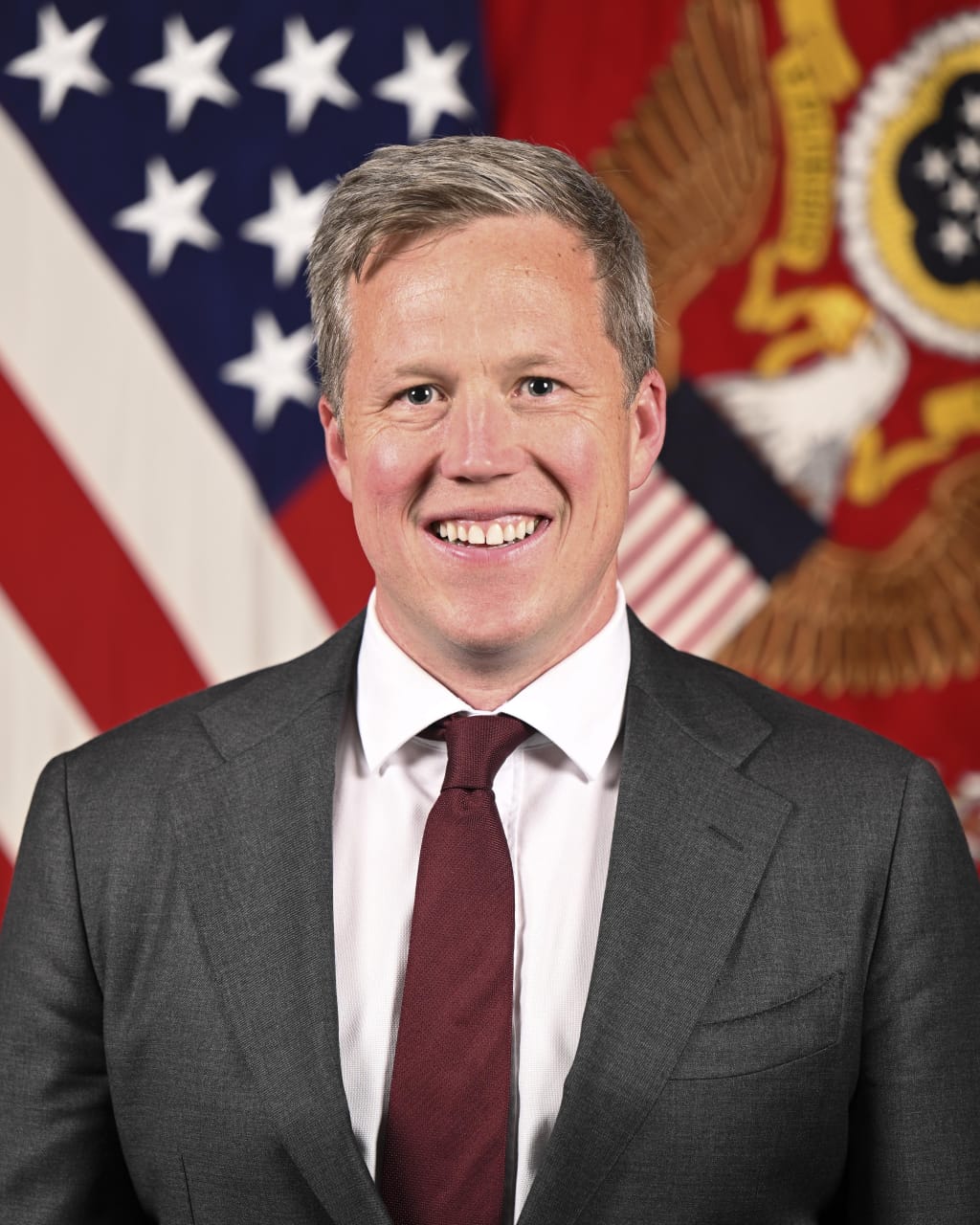
Dan Driscoll, the civilian head of the United States Army, has resigned after months of reported tension with US Secretary of Defense Pete Hegseth, deepening a leadership crisis at the Pentagon as American forces remain engaged in military operations abroad.
Driscoll submitted his resignation to President Donald Trump on Monday, August 31, bringing an abrupt end to his 18-month tenure as Army secretary. The White House confirmed his departure but did not give an official reason for his resignation.
The resignation, however, comes after months of increasingly strained relations between Driscoll and Hegseth, with disagreements reportedly centred on the direction of the Army, the removal of senior military officers and how quickly the service should be transformed to meet changing warfare demands.
Driscoll, a former Army officer and Iraq War veteran, had emerged as one of the Trump administration's more prominent figures on military modernisation. He pushed for faster weapons acquisition, greater use of drones and other emerging technologies, and reforms to a defence procurement system he argued was too slow to respond to soldiers' needs.
His departure follows series of disruptive changes to the Army's senior leadership under Hegseth.
In April, Hegseth abruptly removed Army Chief of Staff Gen. Randy George, the service's highest-ranking uniformed officer. Driscoll had been closely aligned with George and reportedly objected to the decision. George's removal was followed by the departures and removals of several other senior Army commanders, including Gen. Christopher Donahue, who led US Army Europe and Africa.
The changes have left the Army facing an unusual leadership gap. Gen. Christopher LaNeve has been serving as acting chief of staff following George's removal, while the Army now prepares for the departure of its senior civilian leader as well.
The friction between Driscoll and Hegseth reportedly went beyond disagreements over individual personnel decisions. Officials familiar with their relationship described clashes over Hegseth's expectations that Driscoll show greater deference to the defence secretary, as well as disagreements over the Army's transformation programme.
Driscoll had also become closely associated with efforts to move the Army towards a faster, technology-driven model of warfare. Among his priorities was expanding the Army's ability to develop and deploy drones and counter-drone systems, reflecting lessons from conflicts in Ukraine and elsewhere.
Some of those initiatives have since come under pressure. Under LaNeve, the Army has moved to end a drone programme that Driscoll had championed, another indication of the competing visions within the service.
The disagreement was particularly notable because Driscoll was not simply another political appointee. He was a former Army officer, a veteran of the Iraq War and a close friend and former Yale Law School classmate of Vice President JD Vance. Trump had described him when nominating him as a "disruptor and change agent."
Driscoll also gained an unusually prominent diplomatic role during his time in office. In November 2025, Trump sent him to Ukraine as a representative of the administration during efforts to negotiate an end to the Russia-Ukraine war, making him one of the administration's most visible figures in those talks.
His departure therefore represents more than a routine change in personnel.
It leaves the Army without its Senate-confirmed civilian secretary at a time when the service is undergoing significant organisational changes and the United States remains involved in major military operations.
The timing is especially sensitive because the Trump administration is currently dealing with the consequences of its military confrontation with Iran, placing additional demands on America's armed forces. Sources in the White House have described Driscoll's departure as another leadership shake-up during the Iran war, while others have pointed to wider turnover among senior military officials under Hegseth.
The White House has nevertheless presented Driscoll's tenure positively.
White House spokesperson Anna Kelly said he had been effective in advancing Trump's defence agenda, restoring emphasis on military readiness and lethality, and assisting with negotiations between Russia and Ukraine. The White House also credited him with strengthening the Army during what it described as historic military operations.
But the circumstances surrounding his exit have inevitably shifted attention back to the growing concentration of power around Hegseth at the Pentagon.
Since becoming defence secretary, Hegseth has overseen or been associated with the departures of several senior military leaders, including former Joint Chiefs Chairman Gen. Charles "CQ" Brown, former Chief of Naval Operations Adm. Lisa Franchetti and other senior Army officers.
Driscoll's resignation adds another senior name to that list.
For the Army, the immediate question is who will take over and whether the next secretary will continue Driscoll's push for rapid technological change and procurement reform or adopt the direction now being set by Hegseth and the Pentagon's current leadership.
For the Trump administration, the episode adds to a broader debate over the pace and nature of its reshaping of America's military leadership.
Driscoll's resignation is effective September 3, according to a source familiar with his plans. His departure means that, within months, the Army has lost both its civilian secretary and its top uniformed officer, leaving an institution responsible for more than one million active-duty, National Guard and reserve soldiers in the middle of a significant leadership transition.

 Noble Nigeria

© Noble Nigeria. All Rights Reserved || Privacy Policy and User Agreement