Source: BBC
South African Jurist Wins Nobel Peace Prize for Defending International Law
The former UN human rights chief’s award recognises a career spanning the fight against apartheid, landmark international war-crimes trials and investigations into alleged atrocities in Gaza, at a time when global judicial institutions face mounting political pressure.
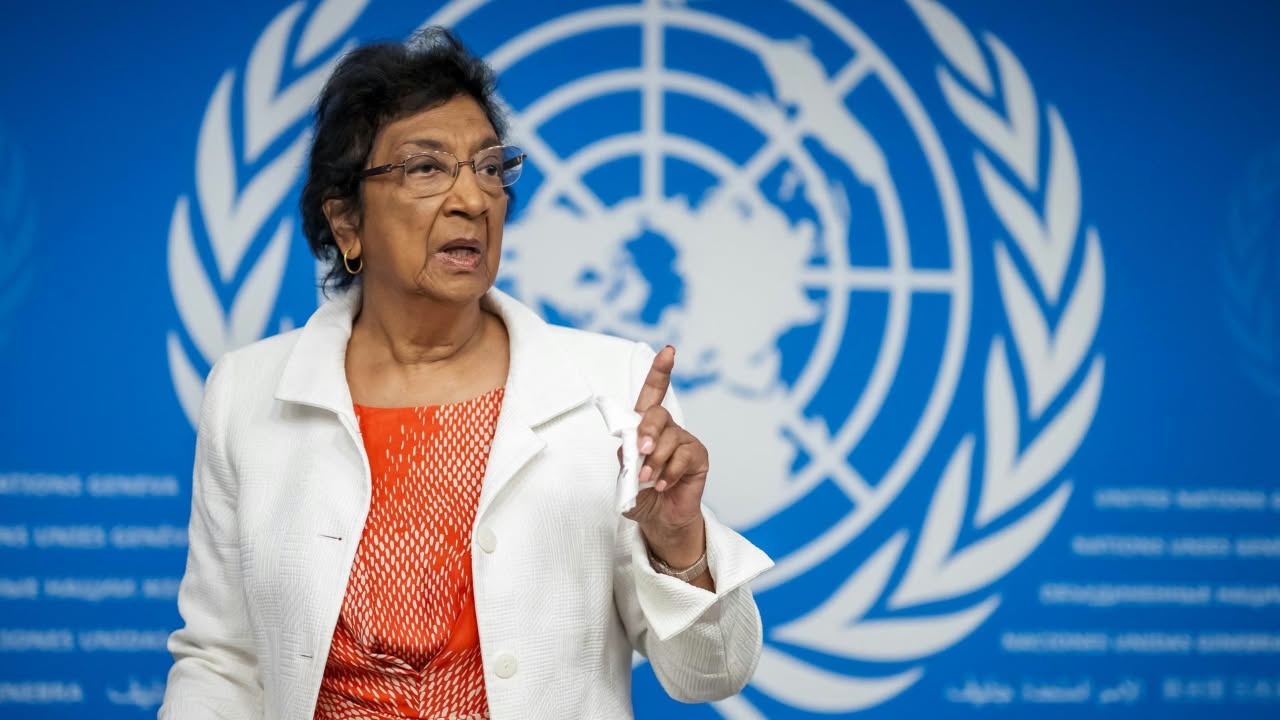
Navi Pillay’s legal career began in a country where the law itself was used to enforce racial separation. Nearly six decades after she opened her own legal practice in apartheid-era South Africa, the 85-year-old jurist has won the 2026 Nobel Peace Prize for her efforts to promote peace and international law, receiving international recognition for a career devoted to challenging abuses of power.
The Norwegian Nobel Committee announced the award in Oslo on Friday, October 9, describing Pillay as a driving force in the development of an international legal order. The committee said the prize was intended to underline the importance of resolving conflicts without violence and ensuring that those responsible for serious crimes can be held accountable.
Born Navanethem Pillay to a family of Indian Tamil descent in Durban, South Africa, she entered the legal profession under apartheid, when racial discrimination restricted the opportunities available to non-white professionals. In 1967, she became the first woman to establish a law practice in Natal Province, representing opponents of apartheid and others whose rights were threatened by the system.
Her work brought her into the wider struggle against a government that used legislation, policing and the courts to maintain white-minority rule. While Nelson Mandela and other anti-apartheid figures became internationally recognised symbols of resistance, lawyers working within the legal system also challenged the machinery that sustained racial oppression. Pillay’s later career would take that work beyond South Africa, into international institutions established to investigate atrocities and prosecute those responsible.
In 1995, she became the first black woman appointed to South Africa’s High Court. Four years later, she joined the International Criminal Tribunal for Rwanda, eventually serving as its president. The tribunal was established after the 1994 genocide in Rwanda, in which approximately 800,000 people were killed, predominantly Tutsi, alongside moderate Hutu and others who opposed the violence.
Pillay played a significant role in the tribunal’s treatment of sexual violence as an international crime. In the landmark Prosecutor v. Akayesu judgment in 1998, the tribunal recognised that rape and sexual violence could constitute acts of genocide when committed with the required intent. The ruling helped establish a legal framework for prosecuting sexual violence as more than an incidental consequence of conflict.
She later served as a judge at the International Criminal Court, which prosecutes individuals accused of genocide, crimes against humanity, war crimes and the crime of aggression within its jurisdiction. From 2008 to 2014, she was the United Nations High Commissioner for Human Rights, a position that placed her at the centre of international efforts to document abuses and press governments to uphold human rights.
Her work has continued into some of the most contentious legal disputes of recent years. Pillay chaired the UN Independent International Commission of Inquiry on the Occupied Palestinian Territory from 2021 to 2025. In September 2025, the commission concluded that Israel had committed genocide in Gaza and that senior Israeli officials had incited its commission. Israel rejected the findings, describing the report as scandalous.
The conclusions intensified an already bitter dispute over accountability for the war in Gaza. They also placed Pillay’s work within a wider confrontation over the authority of international legal institutions. The International Criminal Court has faced sanctions and criticism from the United States over its actions involving Israeli leaders, while governments accused of serious violations have repeatedly challenged the legitimacy, jurisdiction or impartiality of international investigations.
The Nobel Committee’s decision comes against that background. Its announcement stressed that international law and the institutions responsible for enforcing it are under substantial pressure, warning that the displacement of legal frameworks by power politics threatens stability and peaceful coexistence. The award was not presented as a verdict on every dispute involving Pillay’s work; rather, the committee highlighted the broader principle that the peaceful resolution of conflicts depends on a functioning international legal order.
That principle however, remains difficult to enforce. International courts depend on legal jurisdiction, evidence, state cooperation and mechanisms for implementing their decisions. They do not possess an independent global police force capable of compelling every government to comply. Powerful states can refuse cooperation, challenge investigations and exert political pressure on institutions, leaving a persistent gap between legal findings and practical consequences.
For African countries, Pillay’s recognition carries a particular historical resonance. The continent’s experience includes colonial rule, apartheid, civil wars, mass atrocities and prolonged struggles to secure justice for victims. African states and individuals have also been central to the development of international criminal law, even as the work of international courts has generated debate about selective enforcement and unequal treatment of countries.
Pillay’s career connects these histories: a lawyer challenging apartheid, a judge helping establish legal principles for prosecuting genocide and sexual violence, and a UN official working to defend human rights across national borders. Her Nobel Peace Prize places that record within the continuing argument over whether international law can constrain those who wield political and military power.
The prize, worth 12 million Swedish kronor, is scheduled to be presented in Oslo on December 10, the anniversary of Alfred Nobel’s death. Its significance, however, will extend beyond the ceremony.
The recognition of Pillay’s work renews attention on a question that has followed international justice from the aftermath of apartheid and Rwanda to Gaza and other conflicts: whether the law can offer meaningful protection to victims when the powerful resist being held accountable.

 Noble Nigeria

© Noble Nigeria. All Rights Reserved || Privacy Policy and User Agreement