Source: BBC
Kenya Confirms Second Ebola Case as Cross-Border Response Intensifies
The infection was detected in a relative of Kenya’s first patient while he was in quarantine, renewing scrutiny of regional border surveillance as an outbreak of the rare Bundibugyo strain continues in the Democratic Republic of Congo._
Kenya has confirmed a second case of Ebola after a 39-year-old man, a close relative of the country’s first confirmed patient, developed symptoms while in quarantine, prompting health authorities to intensify contact tracing and surveillance. The Ministry of Health announced the infection on Wednesday, October 14, describing the two cases as linked and reporting no evidence of wider community transmission at the time.
The second case comes just over a week after Kenya confirmed its first infection, involving a Kenyan man who had been living in the Democratic Republic of Congo (DRC). The man fell ill in Congo, received treatment at health facilities there and travelled by road to Uganda before flying to Nairobi on October 3. He was admitted to hospital, tested positive for the virus and died on October 5.
His journey across three countries before the infection was confirmed raised questions about the effectiveness of regional screening arrangements, particularly given the restrictions on movement across the DRC-Uganda border during the outbreak. Kenyan authorities have been working with regional health officials to investigate the circumstances of his journey and identify people who may have been exposed.
The second patient had already been identified as a contact and placed under quarantine when he developed fever, fatigue and joint pain on October 13. He was isolated and transferred to a designated treatment facility after testing positive. Kenya’s health authorities said early detection had improved the prospects of managing the infection, although his subsequent condition was not established in the initial announcement.
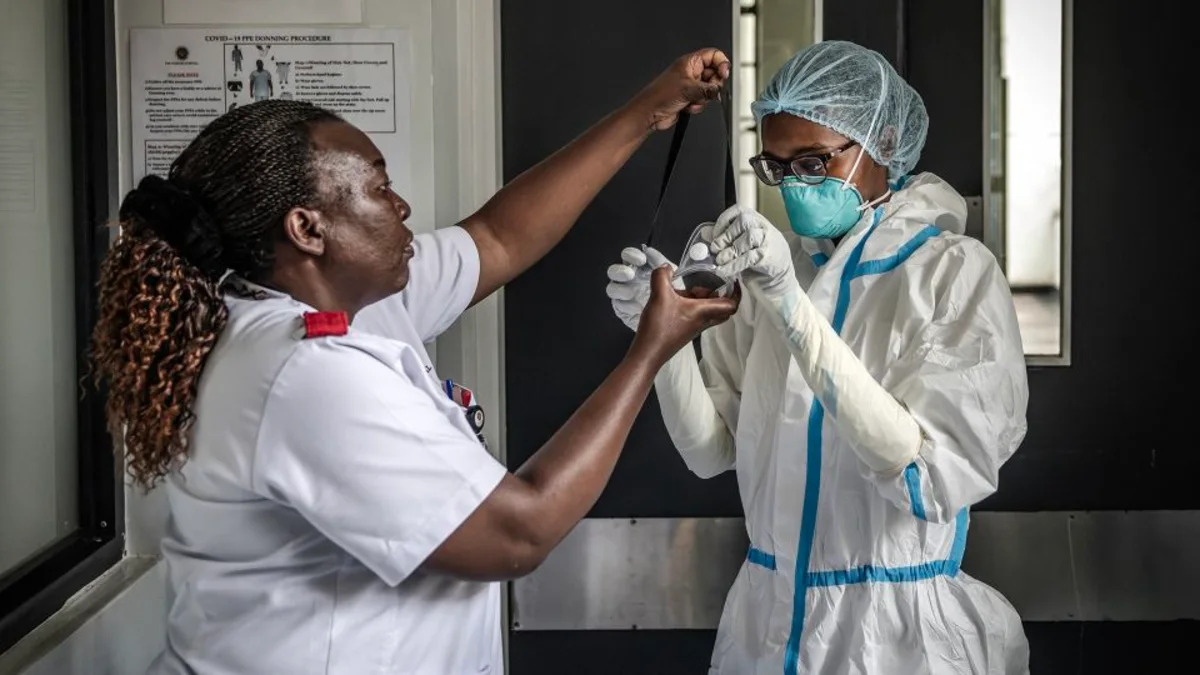
The case illustrates the importance of maintaining contact surveillance after an infected person has been identified. Ebola symptoms can emerge during the incubation period, which means that people who initially appear well may become ill days later. Quarantine, daily monitoring and rapid testing are intended to identify infections before further transmission occurs.
Kenya had identified 128 contacts linked to the first patient by October 14, of whom 113 had been traced. Of those, 108 were in quarantine in Kenya, while five were outside the country and being followed up through the relevant health authorities. Investigations were also being extended to people who might have encountered the second patient, including health workers and staff at the quarantine facility.
The immediate challenge is to establish whether the two confirmed cases represent a contained chain of transmission or the beginning of a wider outbreak beyond Kenya’s borders. The authorities’ statement that there was no evidence of community spread was an assessment at the time of the announcement, not a guarantee that additional infections would not emerge. Continued monitoring and testing will be necessary to establish whether the response has contained the infection.
Kenya’s experience is closely connected to the larger outbreak in the DRC, where the Bundibugyo strain has spread through several areas. The World Health Organization has been supporting the response in both countries, including case investigation, surveillance, laboratory testing and measures to prevent infections in healthcare settings. Kenya is the fourth country to report cases linked to the ongoing outbreak.
The outbreak is particularly challenging because Bundibugyo virus belongs to a distinct species of Ebola virus for which there is no approved vaccine or specific treatment. Medical care therefore focuses on supportive treatment, early recognition of symptoms, infection prevention and close monitoring of people who may have been exposed. Ebola spreads primarily through direct contact with the blood or other bodily fluids of infected people, including deceased patients, rather than through casual proximity alone.
Kenya has strengthened screening at airports and border crossings, including Nairobi’s Jomo Kenyatta International Airport, as part of efforts to detect suspected infections among travellers. However, temperature checks cannot identify every infected person, particularly when symptoms have not yet developed. Effective surveillance consequently depends on more than screening at entry points: health authorities must be able to exchange information across borders, trace contacts quickly and ensure that suspected cases can be isolated and tested without delay.
For African countries, the outbreak highlights the practical limits of treating infectious disease as a problem confined to national boundaries. People travel for employment, commerce, healthcare and family obligations, while an infection may remain undetected during the journey. When surveillance systems operate unevenly between neighbouring countries, the gaps can complicate efforts to contain a disease even when individual health authorities respond promptly.
Nigeria has a direct interest in these developments because of its extensive regional and international travel connections. The Kenyan cases do not establish that Ebola has spread to Nigeria, and there is no basis for suggesting that they have. They do, however, reinforce the importance of maintaining effective disease surveillance, laboratory readiness and coordination between public health authorities, particularly when an outbreak is active elsewhere on the continent.
The next phase of Kenya’s response will depend on the continued monitoring of contacts, the investigation of possible additional exposures and the identification of any new infections. Authorities will also need to communicate verified updates clearly enough to encourage vigilance without generating unnecessary panic.
For now, the second case confirms that transmission occurred within a close-contact network associated with Kenya’s first patient. Whether the country can prevent that chain from extending further will depend on the speed and consistency of its surveillance and containment measures, as well as cooperation with the countries connected to the wider outbreak.

 Noble Nigeria

© Noble Nigeria. All Rights Reserved || Privacy Policy and User Agreement